

200 Retail Leases Abstracted at Lightning Speed – with Expert QC for Bulletproof Accuracy
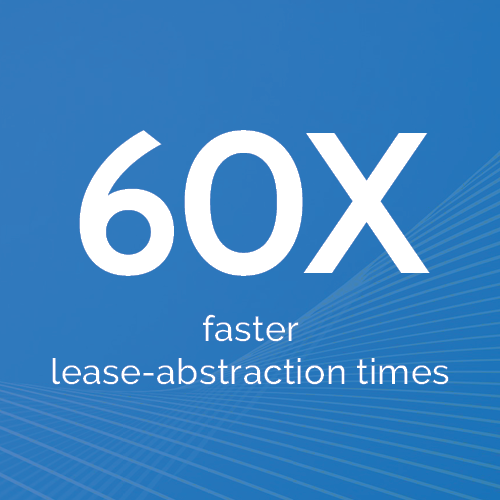
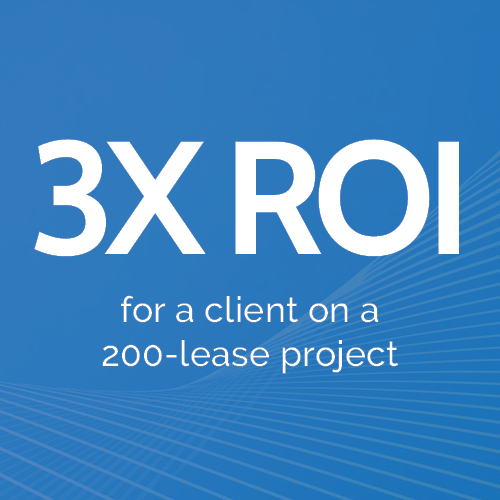
CREModels recently abstracted about 200 retail leases at the touch of a button by combining a proprietary AI processing tool with quality-control checks by our expert real estate analyst team.
“Our AI abstractor typically takes about five minutes or less to run a tenant lease file once we have properly adjusted our prompt architecture based on the needs of the client,” explained Madeline Miller, a CREModels document-abstraction specialist. “All we have to do next is review the output, and that’s very quick now because the abstracts are so accurate.”
With that expert review, the project took about two weeks. By contrast, a pre-AI team might need up to six weeks to abstract all docs and amendments for a 200-lease portfolio.
“That’s a 3x ROI!” Miller said. “AI assistance is just a huge leap forward for document-abstraction if you have the right approach.”
But when real estate pros hear such claims these days, they ought to bring a bit of skepticism, said CREModels Cofounder and Managing Director Mike Jaworski.
“It’s the AI Wild West right now in commercial real estate,” he said. “We’re seeing people try to use general, off-the-shelf LLMs to run lease abstracts, and they’re getting mixed results, including miscalculations of financial data that can lead to bad decisions.”
That could be a Silicon Valley tech firm with no real estate experience claiming to automate the process, or simply a non-techie real estate investor tinkering with Claude or ChatGPT. “Our clients tell us they’ve been getting 75% or 80% accuracy with some of the AI tools and companies they’ve tried,” Jaworski said. “But in the world of lease abstracts, 80% accuracy is no better than 0% accuracy.”
What makes CREModels’ approach so different?
A Carefully Honed Solution
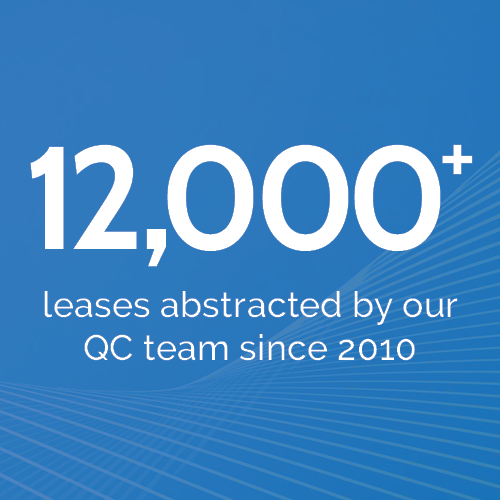
Miller and her colleagues have spent months perfecting the accuracy of the company’s AI-assisted lease-abstraction workflows. Having reviewed over 12,000 leases, they bring years of tech and real estate experience to the quality-control process of this time-saving service.
That has included creating extremely detailed prompt architecture templates for the AI processor.
“I think of the template as functioning like a real estate analyst that is sitting next to the LLM and guiding it through how the abstract should be done,” Jaworski explained. “It’s like, ‘No, this amendment supersedes that one, and here’s how I want you to handle defaults, insurance, rent, operating expenses and taxes in this type of lease.’ That’s what standard LLMs are missing.”
To refine those templates, Miller trained the AI processor on large datasets of actual property leases and amendments. She and her colleagues then spent months stress-testing them to dial up the accuracy.
“We’ve done this as many times as needed to get the abstracts to a place where you can feel confident basing decisions on them,” she said. “We’ve made sure to use leases for which we already had human-vetted abstracts, because that allowed us to make comparisons and diagnose and correct errors in the AI output.”
The CREModels tool has proved effective in sorting through complex information. Retail tenants, for example, often go through multiple footprint expansions and reductions in their long-term relationships with shopping center landlords. “By the time you get to the tenth amendment, it can be pretty confusing,” Miller said. “Our AI processor can now understand that really easily.”
The training includes common “gotchas” that could be tough to spot. “You need orchestrators who understand where those hidden implied red flags exist, and this is something that many of today’s AI solutions lack,” Miller said.

How the Process Works at CREModels
Standard off-the-shelf LLMs can do a serviceable job of simply summarizing an individual retail or residential lease. But this is quite different from a complex, multi-lease abstraction project that bears directly on broader financial performance.
Standard LLMs tend to struggle to read, analyze and properly abstract lease PDFs, which can run up to 200 pages with 15 or 20 separate amendment documents. Their accuracy also drops as volume goes up.
“In testing them, I’ve seen them miss high-level details related to things like common area maintenance or rent abatement,” Miller explained. “They’re more likely to mix up base years, timelines and even financial data when you feed them multiple lease documents.”
Armed with CREModels’ template-based prompt architecture, Miller can now click “abstract all” and accurately process dozens of leases and addendums. The AI tool sorts the abstracts by tenant name. It understands the chronology of amendments and organizes them accordingly.
“You can group abstacts by portfolio, download the abstract into an Excel file or view the abstract within our program,” Miller said. “If you need to add anything, that change will also be downloadable.”
The AI tool puts the abstracts into a standardized data structure that then functions as a draft cashflow model. This makes it easy to automatically underwrite or analyze investment properties within other applications.
Jaworski summarized the utility of these capabilities.
“Say you’re in due diligence,” he said. “Instead of a human reading through all the leases, getting the summaries and putting them into a cash-flow model, you can just drag and drop the documents into our AI tool. In about an hour, you could have 50 leases all abstracted, as well as the initial draft of a larger cash-flow model that takes into account everything found in those leases.”
AI Lease Abstracts are a Big Advance, But Human Review Is Still the Final Word
Human review is the last step. CREModels’ document-abstraction specialists bring extensive experience with retail, office, residential and industrial leases. Miller, for example, has focused exclusively on lease abstracts for nearly five years.
“We take the abstract that was provided by AI and then go through each of the documents to verify that all necessary information is there and accurate,” she said. “Is that still a manual process? Yes, but our approach is way faster than before, without any sacrifice of accuracy. That’s important, because accuracy is what lease-abstraction is all about.”
Building Trust in AI Lease Abstraction
A survey published in May 2026 by First American Data & Analytics and DealGround found that while AI adoption is accelerating quickly in real state, “the technology hasn’t yet earned a trusted role in the decisions that actually drive deals.”
According to that report, “66% of CRE professionals use AI weekly or daily, but just 5% trust AI enough to inform real deal decisions. More than half still use it only for support, not for decision-making.”
Lack of confidence is the snag. “Our approach gives you the confidence needed to reap the benefits of AI,” Jaworski said. “When document-abstraction projects are weeks faster and you trust the information you’re working with, you can move much, much faster on deals.”
Today, the team employs the AI tool internally on client projects, but they plan to integrate AI lease abstraction into CREModels’ trusted CRE Suite platform and make it available as standalone software as well.
“People could then choose to have us do human reviews of the output,” Jaworski said, “but they might just trust it enough to click ‘abstract all’ and hit the ground running on their next move.”